Linh Huynh
Undergraduate Research Assistantship - Wearable Controllers
For this project, I worked with a Professor at DePaul University, LeAnne Wagner, and another student, Claire. This project is exploring the field of wearable technology and interfaces. What the Professor wanted to do was create a wearable controller that dancers were able to wear and control LEDs with their movements.
Role:
For this assistantship/internship, I was in charge of the coding, research, and UI parts. For the coding, I had to learn Arduino and practice using micro-controllers like the Arduino Uno, Adafruit Flora, and Adafruit Circuit Playground Express. For the research side, I did research on IOT products where Claire researched on wearable technologies since she was handling making the clothing to hold the controllers and LED strips. Beside researching about IOT products, I was also researching about micro-controllers and learning about how to better code with Arduino to make it work with the micro-controllers and LED strips. And for UI, during testing the product myself and with the dancers, I was to see if the interaction make sense to what the dancers are doing with their movements. I had to make sure that the color changes were in sync with the movement and that the changes are natural.
Hardware:


Process:
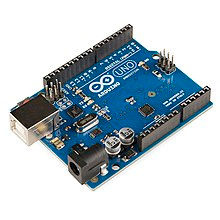
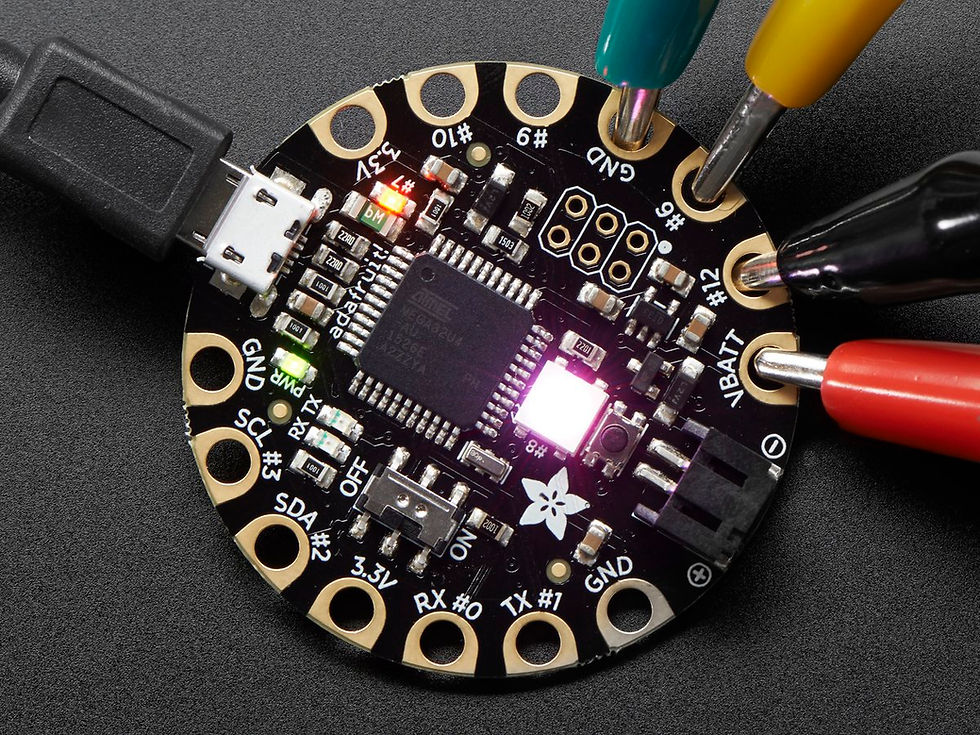
I used Arduino Uno in the beginning of the project to better understand how to use the Arduino IDE and writing the codes. I also used it to better understand what LeAnne wanted me to do with the Adafruit Flora. I was to code what the Arduino Uno does with the LED strip, button, and potentiometer that she came up with, to work using only the Flora micro-controller and LED strips with no extra button or potentiometer (image 1). It took a little bit of time to figure out how the Flora work and what extra parts it had that would replace the button and potentiometer. After some research, I found that the Adafruit Accelerometer (image 2) would work at ready how fast the dancer would be moving and that would change the LEDs according to different ranges of speed. After getting that figured out, it got hard to find documentations on what the numbers meant for the output of the accelerometer and why the readings weren't consistent. A few weeks before the end of the project and having to test with dancers, I found a new micro-controller that would better help with some of the issues coming up while working with the Flora. The Adafruit Circuit Playground Express took out the accelerometer that would be needed to connect to the Flora. We thought that it would make the data output be more consistent, but it was still the same. Our conclusion was that it had to do with the gravity and more calculations that would be needed to be done to get it working like how we wanted it to. In the end, we just used the Circuit Playground Express since it have all the extra parts for the Flora built into the micro-controller.


Testing:
For the testing, I did them at home to make sure that the parts and the code are working correctly. I tested every time I made any changes to the code to make sure that it worked and there were no further issues. Every week, I would demonstrate what I got working to LeAnne and Claire to get feedback. They were mostly feedbacks about the synching the movements with the LED color changes and the direction that the colors were happening from. The LED changed colors from the hand all the way up to the arms as to where it made better sense for the changes to happen all at once instead of in a sequence. LeAnne got in contact with dancers from the Youth Empowerment Performance Project (YEPP) since she had worked with them before to test our product.
Claire had made shrug where the dancers can put on and on each sleeve, it contained the Circuit Playground Express sewed on with conductive thread, a pocket for the battery, and seams on the outside where that LED can go through and stay in place.
We left the dancing to the dancers and just observed how the micro-controllers and LED strips interacted with their movements. We would every now-and-then tell the dancers to move a certain way or to dance faster or slower to see how the colors would change. After testing with the dancers, we found that the problems that we had were with the code and LED strips. the problems with the code was that it wasn't consistent with the dancer's movement, that we already knew from testing, and how it isn't as responsive with fast movements, the changes of the color were slower than the movements. another issue we had was with the LED strips. Because it was one long strip, it wasn't as flexible around the elbow and it would bend from movements since the seams weren't really hold it in place. LeAnne also tested her code with messages and a flower pattern that she made. They worked perfectly and could be seen with our eyes without having to use a camera to see the message was it was being written with the dancer's movements.


Photo credit: Stephanie Nikolaus
Videos credit: Stephanie Nikolaus
I was there for the second testing that LeAnne planned. She was able to make changes to the code that we had problems with from the first testing. She also was able to improve the LED strips. She connect two short LED strips on each sleeve to make the dancer be more flexible and the LED to not bend and turn the other way. Because I didn't do any of the coding, LeAnne was able to catch me up on the changes and what she hoped to see at the testing. I was able to give my input on what the dancers could do and see how the pictures were coming out. From this testing, the consistent between the movements and changes of color were better. The only big issue was that the LED strips started to stop working. It stayed on one color and some went out or glitched. But the end result was still nice and able to see the problems with the code and parts. LeAnne was able to also test her message code along with the patterns.